
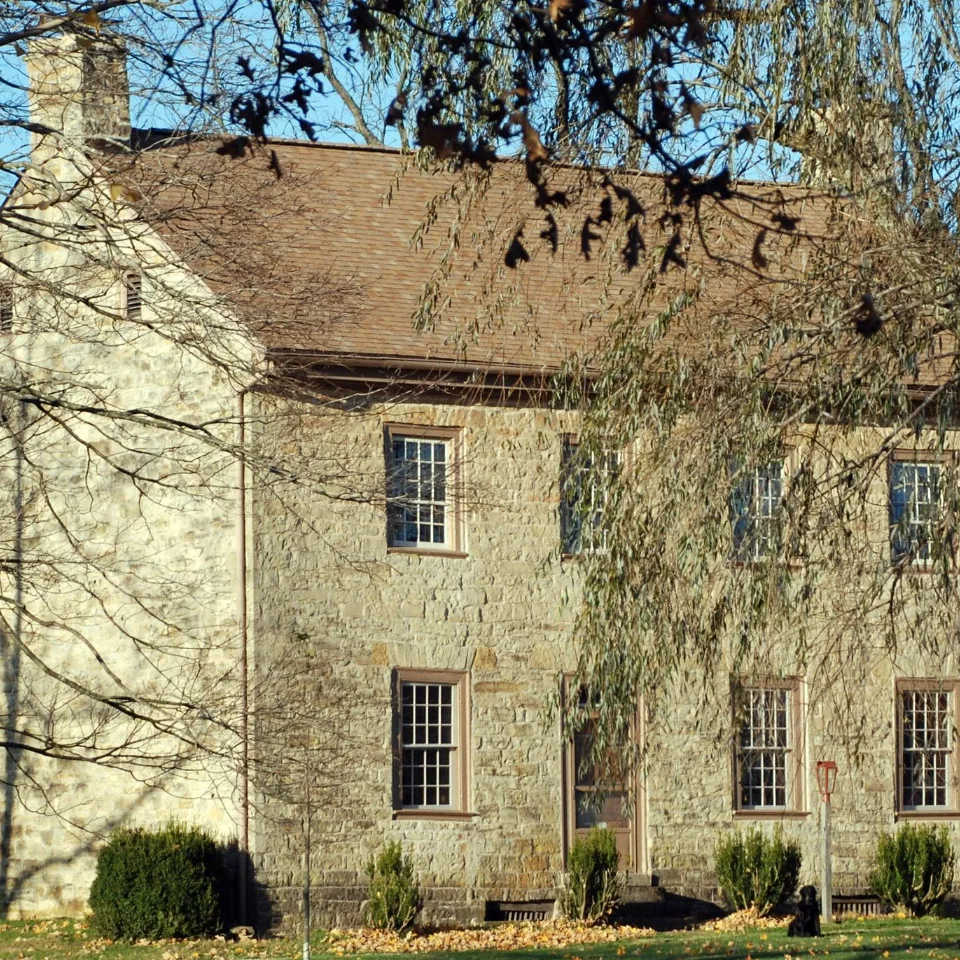
I first heard about the “circus that stayed” when I was eleven years old. My sister Frances Browning and I were visiting Anna V. Lesousky, and — bored out of my mind with their company — I got sent off to chat with her father, “Prof. Al” Lesousky. He was in his office, surrounded by papers and books, deep into researching a strange bit of local history: the tale of a circus that rolled into town… and never really left.
It stuck with me.
Later in life, the story would come up from time to time — usually when Daddy or one of the other old-timers mentioned the old Cherokee Ed farm. Just hearing that name made you pause. Who the hell was Cherokee Ed?
The name popped up again in the 1980s, when Joseph Ellert Mudd began documenting local history on video. That’s where I heard Martin Mudd’s version of events — including the unforgettable bit about the lion scaring the livestock every time it let out a roar.
Eventually, I came across Merrill Dowden’s article in the Saint Charles Catholic Church 225th Anniversary publication, which pulled together many of those scattered memories.
This is what I found.
An October Morning and a Train
Imagine a warm morning in October. Mist still lifts off the rolling Kentucky fields when an unexpected sound echoes through the hills — the distant whistle of a steam locomotive, drawing closer. This was something extraordinary: a circus train, rumbling toward the tiny depot of Saint Mary. And painted in bright letters along the side of one of those cars were the words: Cherokee Ed’s Wild West and Trained Wild Animal Shows Combined.
Cherokee Ed’s Dream: From Saloon to the Wild West
At the center of this unfolding drama stood Edward “Cherokee Ed” Baumeister, a Louisville saloon keeper with big dreams and a flair for the dramatic. By 1909, perhaps inspired by Buffalo Bill Cody and other frontier troupes, Ed reinvented himself as a show impresario. He launched his own traveling Wild West production — a blend of cowboy stunts, sharpshooting acts, and exotic animal spectacles designed to thrill small-town America.
He brought in a veteran to help: Col. Clarence Smith, an experienced circus man. With Smith managing logistics and Ed fronting the money, the Cherokee Ed Wild West Show prepared to hit the rails.
Wagons from a Circus Graveyard
Ed turned to William P. Hall, the legendary Missouri horse trader known as the “Horse King of the World.” Hall’s sprawling farm in Lancaster, Missouri had become a kind of circus graveyard, filled with equipment from defunct shows. Ed struck a deal. Much of Cherokee Ed’s show rolled out on wagons and flatcars that had already seen other tours.
A Short-Lived Wild West Adventure (1909)
In 1909, the Cherokee Ed Wild West Show embarked on its inaugural tour. The show traveled by rail with about ten cars. It featured cowboys, trick riders, Native American performers, and a menagerie of wild animals.
But the reality of touring was unforgiving. As the show reached West Virginia in mid-1909, it was hit by a wave of attachment suits — legal claims from unpaid suppliers. According to Variety, the show was “almost smothered under a rain of attachment suits.” Equipment was seized. Performers went unpaid.
One young man named Floyd King, a popcorn vendor, was among those stranded. He would go on to become a major figure in American circus history.
By the fall of 1909, the Cherokee Ed show limped back to Kentucky, wounded and diminished — but not yet finished.
The Circus Comes to Saint Mary, Kentucky (1910)
Rather than call it quits, Cherokee Ed regrouped for another season in 1910. That’s how Saint Mary, a quiet community in Marion County, became the scene of an unforgettable event.
One fine day, the circus train pulled into the depot and began unloading its spectacle. Car by car, the wagons came down: canvas tents, stock cars of animals, parade wagons.
When the performance began, the band struck up and the big top filled with sound and dust. Cowboys galloped in, performing dizzying trick rides. Sharpshooters dazzled the crowd. There were theatrical skits, too. A mock “Indian attack” unfolded.
Then came the animals. Sammy the Turk — a mysterious figure with a heavy mustache — cracked his whip and put the lion through his paces. Coleman Smock would never forget one terrible afternoon when Sammy the Turk pushed a slab of meat through with his bare hand. The big lion — King Sim — lunged and clamped down. Sammy’s arm was mangled so badly it had to be amputated halfway between the elbow and shoulder.
”The Circus That Stayed” — Local Legend and Aftermath
But the story doesn’t end there. Unlike most circuses that packed up and moved on by dawn, this one… didn’t. Something went wrong. The show stopped moving. People began calling it “the circus that stayed.”
Most famously, a huge wooden animal cage was left on a farm at the edge of town. Kids dared each other to touch it. They pointed out the deep claw marks in the wood.
Most of the animals and performers moved to a farm that Cherokee Ed had rented along what is now called Wimsatt Road. Martin Mudd remembered: “When that lion roared, it spooked the cattle and other livestock to no end!”
The property became known as “Cherokee Ed’s farm.” Tommy Lee Mattingly, longtime postmaster of Saint Mary’s, remembered exploring it as a boy: rusted wagon wheels, scraps of canvas, the scent of old sawdust still clinging to the earth.
Legacy of a Dream
Edward Baumeister faded from show business not long after. But in Marion County, his name lived on. In 2010, the St. Charles Catholic Church 225th Anniversary reprinted Merrill Dowden’s article. The tale of Cherokee Ed’s Wild West Show is now part of Kentucky folklore.
About the Author
Kenny Browning is a lifelong resident of Marion County, Kentucky, with over 72 years of deep roots in the community. A passionate storyteller and history enthusiast, Kenny offers personalized tours that highlight the beauty and history of rural Kentucky.