To Praise, to Bless, to Preach | The Story of St. Rose Priory
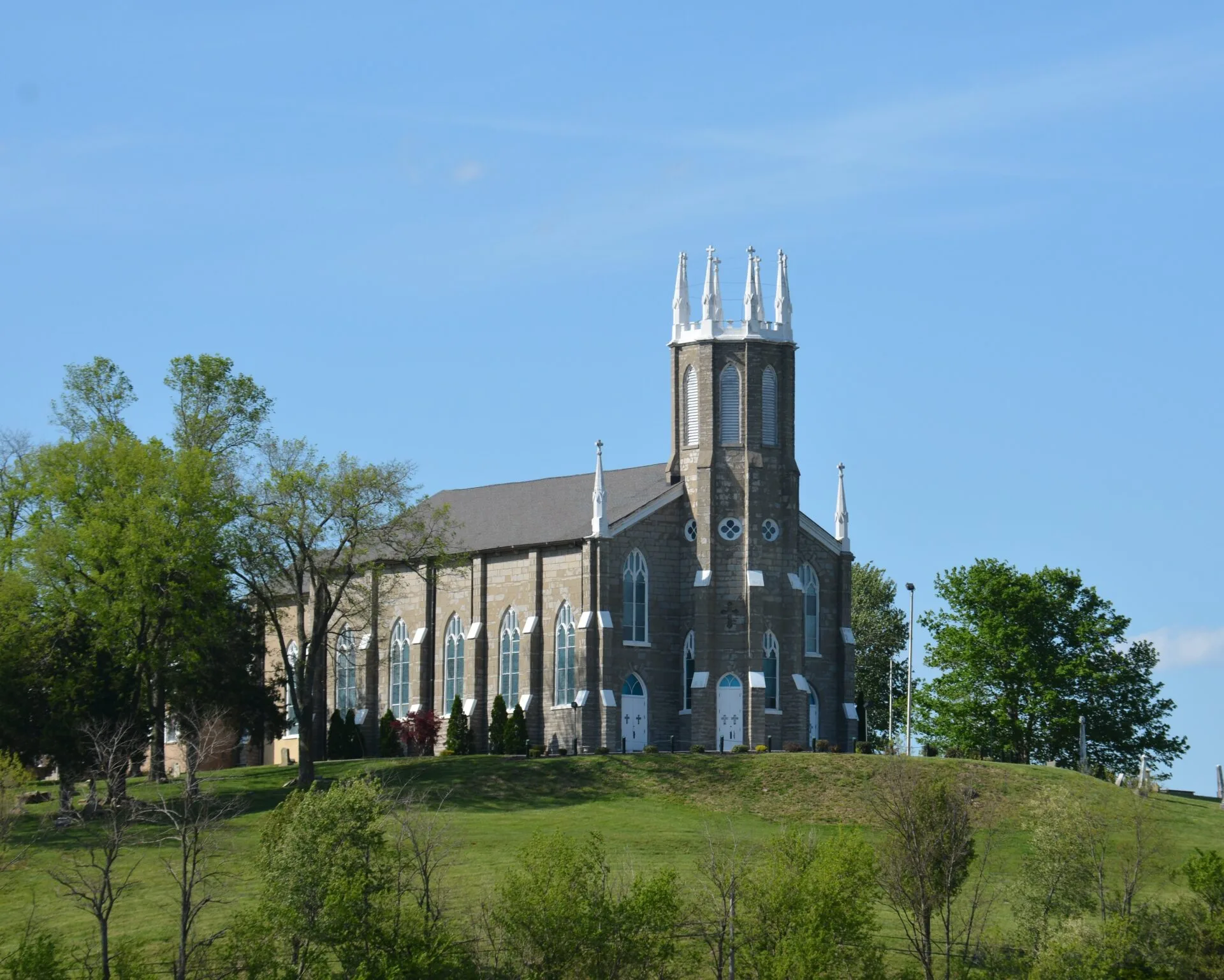
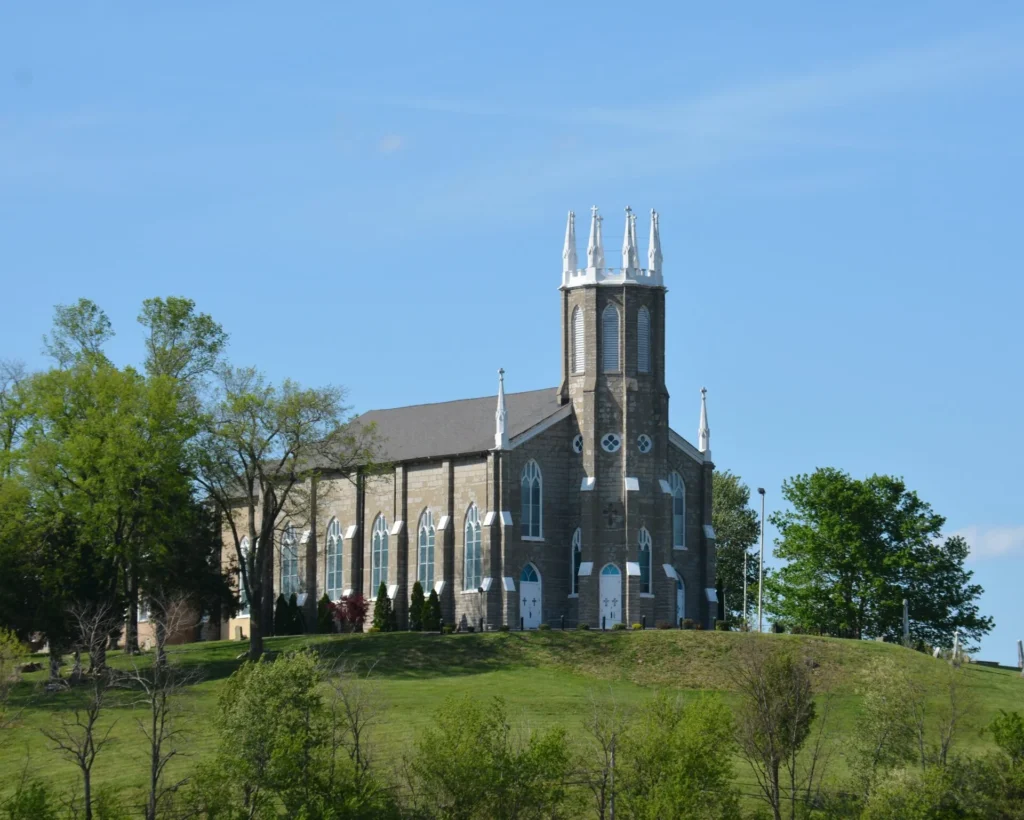
Near Springfield in Washington County, nestled down Loretto road stands a gleaming gothic church and a field of the entombed on the neighboring hill. I’ve been taking photos of this church from time to time but none of them do the scene justice. But on a beautiful day in April 2011, for a change took the camera with me while delivering feed. This one was a keeper!
Founding of the Priory (1806):
The history of Saint Rose Priory begins in 1806 when Father Edward Dominic Fenwick, O.P., along with three other Dominican friars—Father Thomas Wilson, O.P., Father Robert Angier, O.P., and Brother Samuel Wilson, O.P.—arrived in Kentucky from Maryland. They sought to establish a Dominican presence to minister to the growing Catholic population in the western frontier. Kentucky, at that time, had attracted many Catholic settlers, particularly from Maryland, due to the availability of land and religious freedom.
Construction and Early Years:
In 1806, Father Edward Dominic Fenwick, O.P., and a small group of Dominican friars arrived in Kentucky, sent by the Dominican province in Maryland to establish a new mission. Their journey was part of a larger wave of European religious and missionary expansion to the United States, as Catholicism sought to establish a more permanent presence in the newly formed country. Father Fenwick and his fellow Dominicans came from Maryland, where they had been part of the Catholic establishment in that region, but their mission was part of a broader initiative by the Dominican Order to expand westward. The Dominicans had already made a significant impact in Maryland, and their leadership recognized the need for further outreach to the rapidly growing frontier areas. The Dominicans’ arrival in Kentucky was not by chance. The region had been attracting Catholic families from the East Coast, especially from Maryland, Virginia, and Pennsylvania, many of whom were seeking opportunities in the fertile lands of the Bluegrass region. These settlers, primarily of Irish and German descent, were eager for the Catholic faith and a church that could serve their spiritual needs. Father Fenwick and his companions recognized that Kentucky, as a key settlement area in the West, needed a permanent religious institution to nurture the growing Catholic population. To finance the establishment of a priory and church in this new land, Father Fenwick turned to a personal inheritance. In order to gather the necessary funds, he had to sell a piece of family land that had been passed down to him, a legacy from his ancestors. This inheritance was part of the land owned by his family in the eastern United States, which he sold in order to secure the financial resources to establish a mission in Kentucky. This sale of land was not only a financial transaction but also a symbolic act of dedication to his religious calling, as Fenwick chose to use his inheritance to support the work of the Dominican Order in the American frontier. The sale of this land, though significant, was not an isolated act. It was part of a larger trend among Catholic religious orders during this period, where personal sacrifices and the sale of family estates were often necessary to fund missionary work. In this case, Father Fenwick’s sacrifice ensured that the Dominicans could secure the land near Springfield, Kentucky, where they would build a priory and church that would serve as the foundation for Catholic life in the region. The Dominican friars purchased a tract of land that was ideally situated near the main settlement. This land became the site of their priory and the church dedicated to the patronage of Saint Rose of Lima, the first saint of the Americas. Saint Rose, a Peruvian nun who lived in the late 16th century, was known for her deep spirituality, missionary work, and commitment to helping the poor. She was canonized in 1671, and her devotion was widely respected by Catholics in the Americas, making her a fitting patron for this fledgling church community.
Educational Endeavors
Recognizing the need for education, the Dominicans established the first Catholic college west of the Allegheny Mountains—Saint Thomas College—in 1808, initially located at the priory. The college aimed to educate young men for the priesthood and lay leadership. Although the college faced challenges, including financial difficulties and the departure of some faculty, it laid the groundwork for future Catholic educational institutions in the region.
Expansion of the Dominican Mission
Saint Rose Priory served as a base for missionary activities throughout Kentucky and neighboring states. The Dominicans traveled extensively, ministering to isolated Catholic communities and establishing new parishes. Father Fenwick, one of the founders, was later appointed the first Bishop of Cincinnati in 1822, extending the influence of the Dominicans beyond Kentucky.
Architectural Significance
The current church building, constructed in 1852, is an example of Gothic Revival architecture. The design features pointed arches, ribbed vaults, and flying buttresses characteristic of the style. The church’s interior includes notable stained glass windows and religious artwork that reflect the Dominican heritage and the devotional life of the parish community.
Dominican Sisters and Further Contributions
In addition to the friars, the Dominican Sisters played a crucial role in education and social services. The sisters established schools for girls and contributed to the spiritual and educational development of the local population. Their presence complemented the work of the friars and expanded the reach of the Dominican mission.
Civil War Era and Later Developments
During the Civil War, the priory and church faced hardships, including shortages of resources and disruptions caused by the conflict. Despite these challenges, the community remained resilient. In the post-war period, the Dominicans continued to focus on education and pastoral care.
Modern Era and Preservation
Over the years, Saint Rose Church and Priory underwent renovations to preserve its historical and architectural integrity. The site has been recognized for its historical significance and is listed on the National Register of Historic Places. Today, it continues to serve as an active parish, maintaining its legacy as a center of faith and community in Kentucky.
Share this story
About the Author
Kenny Browning is a lifelong resident of Marion County, Kentucky, with over 72 years of deep roots in the community. A passionate storyteller and history enthusiast, Kenny combines his love for local heritage with a talent for creating personalized, memorable tours that highlight the beauty and history of rural Kentucky.
priory church
Historical Context of St. Rose Priory
The establishment of St. Rose Priory in 1806 was a significant milestone in the Catholic Church's expansion into the American frontier. During this period, Kentucky was emerging as a key settlement area for Catholic families seeking religious freedom and community support. The arrival of Dominican friars from Maryland marked the beginning of a dedicated mission to serve the spiritual needs of these settlers.
As Catholic immigration increased, particularly from regions like Maryland, Virginia, and Pennsylvania, the need for a permanent religious institution became evident. Father Edward Dominic Fenwick and his fellow friars recognized the potential for growth in the area and took decisive action to secure land for the priory, laying the groundwork for a vibrant Catholic community that would flourish in the years to come.
Foundational Contributions of the Dominican Order
The Dominican Order played a pivotal role in the establishment of educational and religious institutions in Kentucky, with St. Rose Priory serving as a cornerstone for these efforts. The priory not only provided spiritual guidance but also became a center for education, exemplified by the founding of Saint Thomas College in 1808, the first Catholic college west of the Allegheny Mountains.
Despite facing challenges such as financial difficulties and faculty departures, the college's establishment marked a significant achievement in promoting Catholic education in the region. The influence of the Dominicans extended beyond Kentucky, particularly through Father Fenwick's later appointment as the first Bishop of Cincinnati, which further solidified their commitment to education and community service.
Architectural Features of St. Rose Priory
The architectural design of St. Rose Priory reflects the Gothic Revival style, characterized by its pointed arches, ribbed vaults, and flying buttresses. Constructed in 1852, the church stands as a testament to the artistic and spiritual aspirations of the Dominican friars who envisioned a place of worship that would inspire devotion and community cohesion.
These architectural elements not only enhance the aesthetic appeal of the church but also serve functional purposes, contributing to the structure's stability and longevity. The design choices made during its construction highlight the significance of the priory as a religious and cultural landmark in Kentucky, attracting visitors and worshippers alike.
St. Rose Priory's Role During Historical Challenges
Throughout its history, St. Rose Priory has demonstrated resilience in the face of numerous challenges, including the hardships experienced during the Civil War. The priory and its congregation faced resource shortages and disruptions, yet the community's faith and dedication helped sustain its mission during these trying times.
Today, St. Rose Priory continues to thrive as an active parish, upholding its legacy as a center of faith and community support in Kentucky. The enduring commitment of its members and the historical significance of the priory highlight its role as a beacon of hope and resilience in the local Catholic community.
kentucky, food rescue, feeding america, credit card, tennessee, food bank, hunger, minnesota, virginia, school, development, program, south carolina, north carolina, union, maryland, credit, indiana, health, alabama, new mexico, missouri, kansas, payment, georgia, new hampshire, nutrition, colorado, ohio, illinois, iowa, holy land, faith, supreme court of the united states, jesus, mississippi river, pilgrimage, bible, benedict joseph flaget, mississippi, united kingdom, window, catholic church, monastery, cathedral, france, sisters of loretto, missionary, bourbon whiskey, philadelphia, new zealand, lebanon, oscar getz museum of whiskey history, spain, diocese, priest, arabian peninsula, mass, belgium, email address, portugal, ohio river, africa, new york city, switzerland, thomas merton, tanzania, saudi arabia, parish, tourism, community, sisters, north, loretto, bethlehem, spalding hall, bardstown historical museum, vatican city, abbey, distillation, barrel, kentucky bourbon trail, woodford reserve, cocktail, horse, enable, mint julep, derby, zip line, master distiller, cave, geology, cincinnati, old fashioned, churchill downs, limestone, gift card, accessibility, trail, mining, customer, construction, website, contact, tour guide, client, reserve, customer service, information, glass, button
Frequently Asked Questions
Can you visit horse farms in Heartland Kentucky?
Visiting horse farms in Heartland Kentucky is definitely possible. Many farms offer guided tours where you can learn about the breeding and training of thoroughbreds while enjoying the beautiful landscapes of the region.
Is the Holy Land a popular tourist destination in Kentucky?
The Holy Land is indeed a popular tourist destination in Kentucky, attracting visitors with its unique religious significance and captivating landscapes that reflect the region's historical heritage.
What defines the heartland region of Kentucky?
The heartland region of Kentucky is defined by its rich agricultural landscapes, historic sites, and vibrant culture, showcasing the state’s unique heritage and traditions while serving as a pivotal area for exploring its history and significant landmarks.
What are the main attractions in Kentuckys Holy Land?
The main attractions in Kentucky's Holy Land include historic churches, spiritual landmarks, and significant sites related to the state's religious heritage, offering visitors a unique glimpse into Kentucky's faith-based history and cultural landscape.
What is the significance of the Holy Land in Kentucky?
The significance of the Holy Land in Kentucky lies in its historical and cultural representation of religious faith, notable landmarks, and the role it plays in the spiritual journey of many visitors, reflecting the deep-rooted heritage of the region.
Is Heartland Kentucky a tourist destination?
Heartland Kentucky is indeed a tourist destination, renowned for its rich history, historic landmarks, and cultural heritage. Visitors can explore a variety of significant sites, making it a compelling choice for history enthusiasts and travelers alike.
Where is the Holy Land located in Kentucky?
The Holy Land in Kentucky is located in the town of Wilmore, specifically at the Asbury University campus. This area features significant religious landmarks and serves as a spiritual retreat.
What year was the Holy Land established in Kentucky?
The Holy Land in Kentucky was established in 1972, serving as a significant site for visitors seeking to explore biblical history and its influence on the region.
What are the best horse farms to visit?
The best horse farms to visit include Calumet Farm, known for its rich history and stunning landscapes, and Lane's End Farm, famous for its world-class thoroughbreds. Both offer insightful tours showcasing Kentucky's equestrian heritage.
How do I plan a tour of the Holy Land?
Planning a tour of the Holy Land involves researching key historical sites, selecting a reliable tour operator, determining your travel dates, and considering logistics like accommodations and transportation. It's essential to create a personalized itinerary that highlights your interests while ensuring you have enough time to explore each destination.
What historic sites are in Heartland Kentucky?
The historic sites in Heartland Kentucky include iconic landmarks such as the Mary Todd Lincoln House, the Kentucky State Capitol, and various historic homes and churches that reflect the state's rich heritage and cultural significance.
Are there guided tours of horse farms?
Guided tours of horse farms are available through Historic Heartland Trails. These tours offer visitors an engaging experience to explore the heritage and beauty of Kentucky's renowned equestrian culture.
What festivals celebrate the Holy Land in Kentucky?
Festivals that celebrate the Holy Land in Kentucky include the annual Holy Land Festival, which features cultural exhibits, food, and religious activities, along with community events that promote the rich heritage and traditions associated with the Holy Land.
How to explore Heartland Kentuckys historic landmarks?
Exploring Heartland Kentucky's historic landmarks can be done by booking personalized tours through Historic Heartland Trails, which highlight the state's rich heritage and significant sites, ensuring an enriching and memorable experience.
What unique experiences await in Kentuckys Holy Land?
The unique experiences that await in Kentucky's Holy Land include immersive tours of historic churches, reflections on the spiritual significance of the region, and engaging storytelling that connects visitors with the rich religious heritage of Central Kentucky.
Which local foods should I try in Heartland Kentucky?
The local foods to try in Heartland Kentucky include the famous Kentucky Bourbon, derby pie, fried chicken, and country ham. Be sure to also sample dishes featuring fresh, local ingredients that highlight the rich culinary heritage of the region.
Are there family-friendly activities in Heartland Kentucky?
Family-friendly activities in Heartland Kentucky abound. Families can explore historical sites, enjoy interactive museums, participate in outdoor adventures, and discover local festivals that cater to all ages. There's something for everyone to enjoy together!
What is the history of horse farming in Kentucky?
The history of horse farming in Kentucky is rich and significant, rooted in the state’s early settlement days and shaped by its ideal climate and fertile land, making it a premier location for breeding and raising thoroughbred horses.
Can you recommend scenic routes in Heartland Kentucky?
Scenic routes in Heartland Kentucky include the picturesque Bluegrass Parkway, which offers breathtaking views of rolling hills and horse farms, and the Daniel Boone Parkway, showcasing beautiful landscapes and access to historic sites.
What cultural events occur in Kentuckys Holy Land?
Cultural events in Kentucky's Holy Land include annual religious festivals, community gatherings, and historical reenactments, showcasing the area's rich heritage and faith traditions. Visitors can enjoy local crafts, music, and cuisine during these vibrant celebrations.
What wildlife can be observed in Heartland Kentucky?
The wildlife that can be observed in Heartland Kentucky includes a variety of species such as deer, wild turkeys, numerous bird species, and the occasional bobcat, making it a great destination for nature enthusiasts.
Are there any eco-tours in Heartland Kentucky?
Eco-tours are available in Heartland Kentucky, offering visitors a chance to explore the region's natural beauty while learning about local ecosystems and sustainable practices. Contact us for more details on specific eco-tour options!
What makes the Holy Land special for visitors?
The Holy Land is special for visitors due to its profound historical and spiritual significance, rich cultural heritage, and the opportunity to explore iconic religious sites where pivotal events from Christianity, Judaism, and Islam took place.
How has tourism impacted Heartland Kentucky?
Tourism has positively impacted Heartland Kentucky by boosting the local economy, preserving historic sites, and fostering community pride through increased awareness of the region's rich cultural heritage.
What accommodations are available near Kentuckys Holy Land?
Accommodations near Kentucky's Holy Land include charming bed-and-breakfasts, cozy hotels, and inviting motels, providing visitors with comfortable lodging options to enhance their experience exploring the rich history and spiritual significance of the area.
Are there photography opportunities in the Holy Land?
Photography opportunities in the Holy Land are abundant. With stunning landscapes, historic landmarks, and vibrant local culture, visitors can capture unforgettable moments at sacred sites and picturesque locations throughout the region.
What transportation options exist for Heartland tours?
The transportation options for Heartland tours include comfortable, air-conditioned vans and buses, ensuring a relaxed and enjoyable travel experience while exploring Kentucky's historic sites.
What is the climate like in Heartland Kentucky?
The climate in Heartland Kentucky is characterized by four distinct seasons, featuring hot summers, mild winters, and ample rainfall throughout the year, creating a pleasant environment for exploring its historic sites.
How to best experience the Holy Lands history?
The best way to experience the Holy Lands history is by taking guided tours that provide in-depth insights into historical landmarks and religious sites, allowing you to immerse yourself in the rich cultural heritage and significance of these locations.
What annual events are held in Heartland Kentucky?
Annual events held in Heartland Kentucky include the Kentucky Bourbon Festival, the Great American Brass Band Festival, and various historic reenactments that celebrate the region's rich culture and heritage. These events showcase local traditions and attract visitors from afar.
trails near me, heartland kentucky, tours near me, kentucky historic landmarks, famous landmarks kentucky, famous landmarks of kentucky, historic places in kentucky, historical trails near me, kentucky historical landmarks, historic sites kentucky, famous kentucky landmarks, heartland tours, kentucky faith trail, what is the climate in virginia, heartland tour, heartland rides, heartland trails