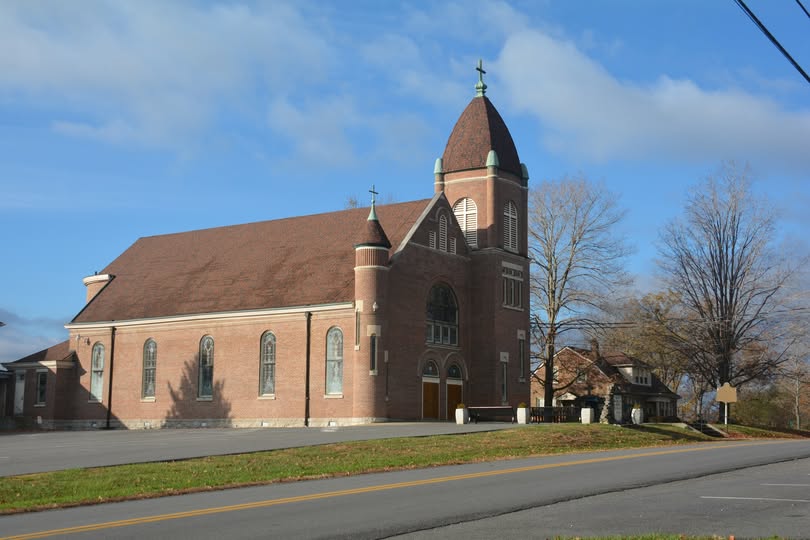
If you’ve ever driven through the winding country roads around Calvary, Kentucky, there’s a good chance you’ve passed by a place that’s quietly watched over the hills and knobs for more than two centuries — Holy Name of Mary Catholic Church.
Nestled among the rolling knobs and green fields of Marion County, this church is more than just a building. One of the oldest Catholic parishes in the entire state, Holy Name of Mary has stood as a spiritual home to generations. And like many enduring places, its story begins with a journey.
The Journey West – Faith on the Frontier
Back in the late 1700s, when Kentucky was still wild and largely unsettled, a group of Catholic families left their homes in Maryland and set out westward. These weren’t ordinary pioneers. They were people who had already endured religious prejudice back east. Families like the Spaldings, Abells, Wathens, and Buckmans weren’t just looking for farmland — they were looking for freedom. Freedom to live and worship as Catholics, to raise their children in peace, and to build communities where their faith wasn’t something to hide, but something to cherish.
Around 1788, many of these families settled near the Rolling Fork of the Salt River, a lush and fertile area. Life was hard. The woods were thick, the land had to be cleared by hand, and threats from both nature and man were real. Still, these settlers endured. They built cabins, planted crops, raised livestock — and just as importantly, they set aside a place for worship. Even before a church stood, faith gathered them. And from those early gatherings, Holy Name of Mary was born.
Rolling Fork Station and a Frontier Death
Among those early settlers was Ignatius Buckman, born in 1754 in St. Mary’s County, Maryland. Along with his brother Clement, he helped establish what was then known as the Rolling Fork Settlement — sometimes called a “station,” in the frontier sense of a small fortified outpost. These stations were necessary in those days. Life on the edge of the frontier meant real danger.
That danger struck close to home in April of 1794. One night, gunshots rang out — four sharp cracks in the dark. The Buckman family ran out to the barn and found Ignatius there, fatally wounded. He’d been shot four times and scalped, likely killed while trying to protect his family and property from horse thieves. He became the first person buried in what would become Holy Name of Mary Cemetery, laid to rest on the hillside behind the church. His grave still stands today.
Even before Buckman’s death, the area wasn’t without tension. In 1792, just as Kentucky was becoming a state, a violent skirmish unfolded along the Rolling Fork River. A group of Native Americans raided a settlement, and a confrontation followed. Four Native warriors and three settlers were killed — one of the last recorded attacks in the region. The Treaty of Greenville in 1795 brought a measure of peace, and the frontier slowly began to stabilize.
A Church is Built – 1805
In 1805, the settlers constructed their first church — a simple log building made by hand with timber cut from the surrounding hills.
As the years passed and the community grew, that original log church was replaced by a more permanent brick structure in 1830.
The third church was constructed in 1891. That building, lovingly maintained and updated through the decades, still serves the people of Calvary today.
The First Priests at Calvary
The early priests who served Holy Name of Mary are almost legends in their own right. Men like Father Stephen Badin, the very first Catholic priest ordained in the United States, rode through the region offering Mass in cabins and churches like Calvary.
Others included Father Michel Barriere and Father Benedict Joseph Flaget, French missionaries who helped nurture the Church across Kentucky. Flaget would go on to become the first Bishop of Bardstown, overseeing one of the largest dioceses in early America.
Perhaps no missionary priest was more beloved than Father Charles Nerinckx, a Belgian priest who arrived in Kentucky in 1805. Though his base was elsewhere, he regularly visited Calvary and inspired religious vocations throughout the region. He even founded the Sisters of Loretto, who would soon play a vital role in Calvary’s history.
By 1811, Holy Name of Mary was formally recognized as a mission parish, and by 1825, it had regular priests serving its people full-time. These men, many of whom are now buried at St. Thomas or the Loretto Motherhouse, laid the spiritual foundations for what would become a deeply Catholic region.
Calvary Academy – The Sisters Arrive
In 1816, the story of Holy Name of Mary took a new turn with the arrival of the Sisters of Loretto. Invited by the parish, the sisters came to open a school: Calvary Academy.
For nearly a century, until 1900, these sisters taught reading, writing, arithmetic, religion, and manners. Discipline was strict — stories of rulers across the knuckles abound — but their mission was clear. They educated the children of Calvary, many of whom would go on to become teachers, priests, and community leaders. They shaped minds and hearts in equal measure.
Though Calvary Academy closed at the turn of the century, its legacy lingers. In 1920, the Ursuline Sisters of Mount Saint Joseph arrived in Calvary to teach both elementary and high school students at Holy Name of Mary. Their presence marked a significant development in education for the area, lasting several generations.
Father Thomas Otho Durbin, the parish pastor at the time, oversaw the construction of the second school building, which housed both grade school and high school classrooms.
Holy Name of Mary Cemetery – Where the Pioneers Rest
Behind the church, shaded by trees and dotted with weathered stones, lies Holy Name of Mary Cemetery — or as locals often call it, Old Calvary Cemetery. This quiet plot of land is one of the most historic cemeteries in central Kentucky.
Names like Buckman, Abell, Spalding, and Wathen are etched into stone, marking the resting places of those who built this community from the ground up. Among the graves are at least three Revolutionary War veterans: John Barton Abell, Henry Hudson, and Wathen Benedict Spalding. These men fought for the birth of a new nation and then traveled west to help build not only a life for themselves, but a Church for future generations. Their graves stand as silent sentinels, watching over the land they helped tame.
A Parish That Endures
Today, more than 225 years after that first log church was built, Holy Name of Mary continues to serve as a spiritual home. Mass is still said, sacraments are still celebrated, and generations continue to gather under the old steeple — just as their ancestors did.
Many parishioners today can trace their family roots back to the original settlers — Buckmans, Abells, Spaldings, and more. These families remain deeply tied to the land, the church, and the faith that carried them across mountains and rivers to the Kentucky frontier.
The church’s story will continue as long as the bells ring out across the hills of Calvary.
Share this story
About the Author
Kenny Browning is a lifelong resident of Marion County, Kentucky, with over 72 years of deep roots in the community. A passionate storyteller and history enthusiast, Kenny combines his love for local heritage with a talent for creating personalized, memorable tours that highlight the beauty and history of rural Kentucky.
History and Significance of Holy Name of Mary Catholic Church
The Holy Name of Mary Catholic Church stands as a testament to the enduring faith and resilience of the early settlers in Calvary, Kentucky. Established in the late 1700s, this church not only served as a place of worship but also as a cornerstone of the community, reflecting the deep spiritual roots that have flourished over generations.
As one of the oldest churches in the region, its historical significance extends beyond its architecture and religious services. The church has been a gathering place for families, fostering a sense of belonging and continuity among its parishioners. Its legacy is intertwined with the stories of the families who built it, making it a living monument to their struggles and triumphs.
The Founding Families of Calvary
The founding families of Calvary, including the Buckmans, Abells, and Spaldings, played a crucial role in establishing the Holy Name of Mary Catholic Church. These pioneers not only sought fertile land but also a community where they could practice their faith freely. Their commitment to building a church reflects the importance of faith in their daily lives.
These families faced numerous challenges, from clearing land to defending their settlement against threats. Their perseverance laid the groundwork for a vibrant community that values its heritage and religious traditions. Today, many descendants of these founding families continue to attend the church, honoring their ancestors' legacy.
Architectural Evolution of Holy Name of Mary
The architectural evolution of the Holy Name of Mary Catholic Church mirrors the growth and changes in the community it serves. Originally a simple log structure, the church has undergone several renovations and expansions to accommodate the needs of its growing congregation while preserving its historical essence.
Each phase of construction reflects the resources and craftsmanship of the time, showcasing styles that range from rustic to more refined designs. These architectural changes not only enhance the church's aesthetic appeal but also symbolize the enduring faith and commitment of the community to maintain their spiritual home.
Community Involvement and Outreach Programs
The Holy Name of Mary Catholic Church remains deeply involved in community outreach, reflecting its commitment to serving not just its parishioners but the broader Calvary area. Various programs, including food drives, educational initiatives, and social gatherings, foster a spirit of collaboration and support among residents.
These outreach efforts are vital in addressing local needs and strengthening community bonds. By engaging with residents through service projects and events, the church continues to fulfill its mission of love and service, echoing the principles laid down by its founders over two centuries ago.
kentucky, food rescue, feeding america, credit card, tennessee, food bank, hunger, minnesota, virginia, school, development, program, south carolina, north carolina, union, maryland, credit, indiana, health, alabama, new mexico, missouri, kansas, payment, georgia, new hampshire, nutrition, colorado, ohio, illinois, iowa, holy land, faith, supreme court of the united states, jesus, mississippi river, pilgrimage, bible, benedict joseph flaget, mississippi, united kingdom, window, catholic church, monastery, cathedral, france, sisters of loretto, missionary, bourbon whiskey, philadelphia, new zealand, lebanon, oscar getz museum of whiskey history, spain, diocese, priest, arabian peninsula, mass, belgium, email address, portugal, ohio river, africa, new york city, switzerland, thomas merton, tanzania, saudi arabia, parish, tourism, community, sisters, north, loretto, bethlehem, spalding hall, bardstown historical museum, vatican city, abbey, distillation, barrel, kentucky bourbon trail, woodford reserve, cocktail, horse, enable, mint julep, derby, zip line, master distiller, cave, geology, cincinnati, old fashioned, churchill downs, limestone, gift card, accessibility, trail, mining, customer, construction, website, contact, tour guide, client, reserve, customer service, information, glass, button
Frequently Asked Questions
Can you visit horse farms in Heartland Kentucky?
Visiting horse farms in Heartland Kentucky is definitely possible. Many farms offer guided tours where you can learn about the breeding and training of thoroughbreds while enjoying the beautiful landscapes of the region.
Is the Holy Land a popular tourist destination in Kentucky?
The Holy Land is indeed a popular tourist destination in Kentucky, attracting visitors with its unique religious significance and captivating landscapes that reflect the region's historical heritage.
What defines the heartland region of Kentucky?
The heartland region of Kentucky is defined by its rich agricultural landscapes, historic sites, and vibrant culture, showcasing the state’s unique heritage and traditions while serving as a pivotal area for exploring its history and significant landmarks.
What are the main attractions in Kentuckys Holy Land?
The main attractions in Kentucky's Holy Land include historic churches, spiritual landmarks, and significant sites related to the state's religious heritage, offering visitors a unique glimpse into Kentucky's faith-based history and cultural landscape.
What is the significance of the Holy Land in Kentucky?
The significance of the Holy Land in Kentucky lies in its historical and cultural representation of religious faith, notable landmarks, and the role it plays in the spiritual journey of many visitors, reflecting the deep-rooted heritage of the region.
Is Heartland Kentucky a tourist destination?
Heartland Kentucky is indeed a tourist destination, renowned for its rich history, historic landmarks, and cultural heritage. Visitors can explore a variety of significant sites, making it a compelling choice for history enthusiasts and travelers alike.
Where is the Holy Land located in Kentucky?
The Holy Land in Kentucky is located in the town of Wilmore, specifically at the Asbury University campus. This area features significant religious landmarks and serves as a spiritual retreat.
What year was the Holy Land established in Kentucky?
The Holy Land in Kentucky was established in 1972, serving as a significant site for visitors seeking to explore biblical history and its influence on the region.
What are the best horse farms to visit?
The best horse farms to visit include Calumet Farm, known for its rich history and stunning landscapes, and Lane's End Farm, famous for its world-class thoroughbreds. Both offer insightful tours showcasing Kentucky's equestrian heritage.
How do I plan a tour of the Holy Land?
Planning a tour of the Holy Land involves researching key historical sites, selecting a reliable tour operator, determining your travel dates, and considering logistics like accommodations and transportation. It's essential to create a personalized itinerary that highlights your interests while ensuring you have enough time to explore each destination.
What historic sites are in Heartland Kentucky?
The historic sites in Heartland Kentucky include iconic landmarks such as the Mary Todd Lincoln House, the Kentucky State Capitol, and various historic homes and churches that reflect the state's rich heritage and cultural significance.
Are there guided tours of horse farms?
Guided tours of horse farms are available through Historic Heartland Trails. These tours offer visitors an engaging experience to explore the heritage and beauty of Kentucky's renowned equestrian culture.
What festivals celebrate the Holy Land in Kentucky?
Festivals that celebrate the Holy Land in Kentucky include the annual Holy Land Festival, which features cultural exhibits, food, and religious activities, along with community events that promote the rich heritage and traditions associated with the Holy Land.
How to explore Heartland Kentuckys historic landmarks?
Exploring Heartland Kentucky's historic landmarks can be done by booking personalized tours through Historic Heartland Trails, which highlight the state's rich heritage and significant sites, ensuring an enriching and memorable experience.
What unique experiences await in Kentuckys Holy Land?
The unique experiences that await in Kentucky's Holy Land include immersive tours of historic churches, reflections on the spiritual significance of the region, and engaging storytelling that connects visitors with the rich religious heritage of Central Kentucky.
Which local foods should I try in Heartland Kentucky?
The local foods to try in Heartland Kentucky include the famous Kentucky Bourbon, derby pie, fried chicken, and country ham. Be sure to also sample dishes featuring fresh, local ingredients that highlight the rich culinary heritage of the region.
Are there family-friendly activities in Heartland Kentucky?
Family-friendly activities in Heartland Kentucky abound. Families can explore historical sites, enjoy interactive museums, participate in outdoor adventures, and discover local festivals that cater to all ages. There's something for everyone to enjoy together!
What is the history of horse farming in Kentucky?
The history of horse farming in Kentucky is rich and significant, rooted in the state’s early settlement days and shaped by its ideal climate and fertile land, making it a premier location for breeding and raising thoroughbred horses.
Can you recommend scenic routes in Heartland Kentucky?
Scenic routes in Heartland Kentucky include the picturesque Bluegrass Parkway, which offers breathtaking views of rolling hills and horse farms, and the Daniel Boone Parkway, showcasing beautiful landscapes and access to historic sites.
What cultural events occur in Kentuckys Holy Land?
Cultural events in Kentucky's Holy Land include annual religious festivals, community gatherings, and historical reenactments, showcasing the area's rich heritage and faith traditions. Visitors can enjoy local crafts, music, and cuisine during these vibrant celebrations.
What wildlife can be observed in Heartland Kentucky?
The wildlife that can be observed in Heartland Kentucky includes a variety of species such as deer, wild turkeys, numerous bird species, and the occasional bobcat, making it a great destination for nature enthusiasts.
Are there any eco-tours in Heartland Kentucky?
Eco-tours are available in Heartland Kentucky, offering visitors a chance to explore the region's natural beauty while learning about local ecosystems and sustainable practices. Contact us for more details on specific eco-tour options!
What makes the Holy Land special for visitors?
The Holy Land is special for visitors due to its profound historical and spiritual significance, rich cultural heritage, and the opportunity to explore iconic religious sites where pivotal events from Christianity, Judaism, and Islam took place.
How has tourism impacted Heartland Kentucky?
Tourism has positively impacted Heartland Kentucky by boosting the local economy, preserving historic sites, and fostering community pride through increased awareness of the region's rich cultural heritage.
What accommodations are available near Kentuckys Holy Land?
Accommodations near Kentucky's Holy Land include charming bed-and-breakfasts, cozy hotels, and inviting motels, providing visitors with comfortable lodging options to enhance their experience exploring the rich history and spiritual significance of the area.
Are there photography opportunities in the Holy Land?
Photography opportunities in the Holy Land are abundant. With stunning landscapes, historic landmarks, and vibrant local culture, visitors can capture unforgettable moments at sacred sites and picturesque locations throughout the region.
What transportation options exist for Heartland tours?
The transportation options for Heartland tours include comfortable, air-conditioned vans and buses, ensuring a relaxed and enjoyable travel experience while exploring Kentucky's historic sites.
What is the climate like in Heartland Kentucky?
The climate in Heartland Kentucky is characterized by four distinct seasons, featuring hot summers, mild winters, and ample rainfall throughout the year, creating a pleasant environment for exploring its historic sites.
How to best experience the Holy Lands history?
The best way to experience the Holy Lands history is by taking guided tours that provide in-depth insights into historical landmarks and religious sites, allowing you to immerse yourself in the rich cultural heritage and significance of these locations.
What annual events are held in Heartland Kentucky?
Annual events held in Heartland Kentucky include the Kentucky Bourbon Festival, the Great American Brass Band Festival, and various historic reenactments that celebrate the region's rich culture and heritage. These events showcase local traditions and attract visitors from afar.
trails near me, heartland kentucky, tours near me, kentucky historic landmarks, famous landmarks kentucky, famous landmarks of kentucky, historic places in kentucky, historical trails near me, kentucky historical landmarks, historic sites kentucky, famous kentucky landmarks, heartland tours, kentucky faith trail, what is the climate in virginia, heartland tour, heartland rides, heartland trails