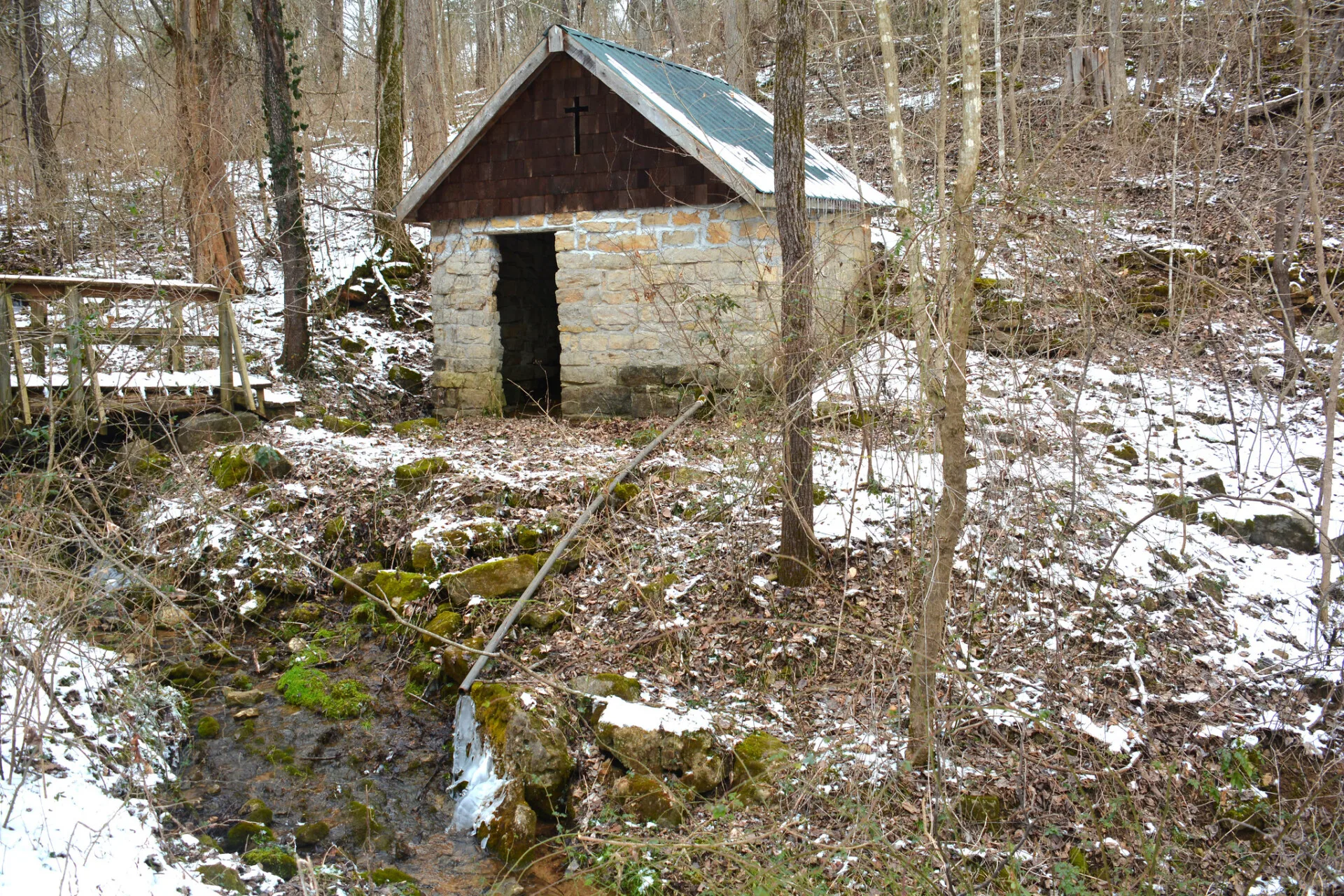
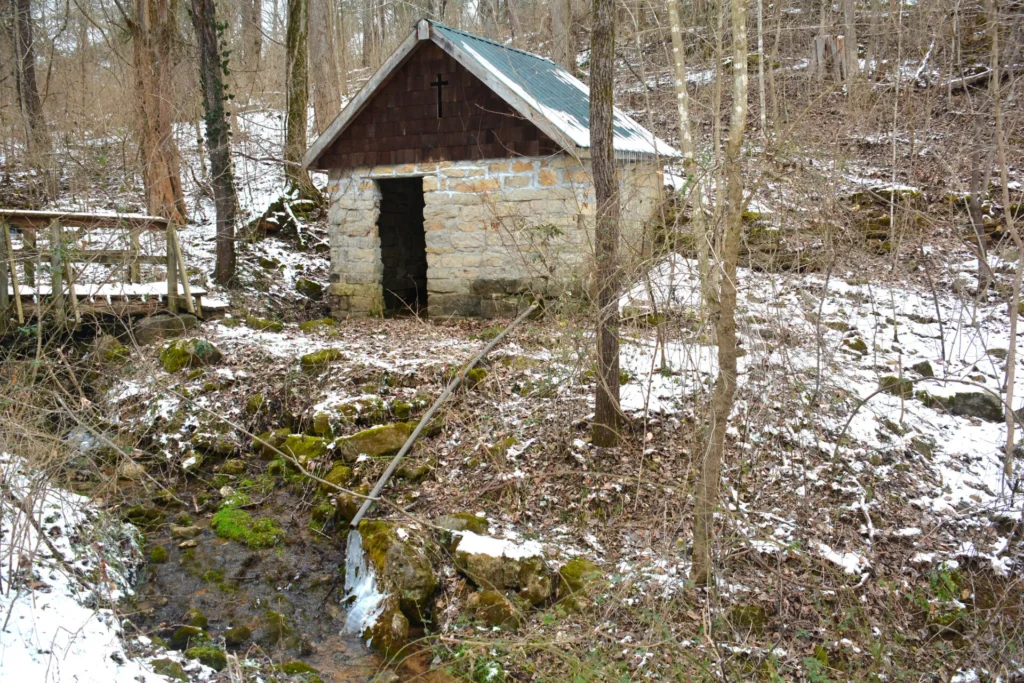
On St. Thomas Farm in Nelson County, Kentucky, a modest springhouse stands as a steadfast relic of the early 19th century, with its lower portion likely dating back to the 1790s. This unassuming structure bears witness to the farm’s pivotal role in shaping the Catholic Church in Kentucky and founding the Sisters of Charity of Nazareth.
The story begins with Thomas and Ann (Gough) Howard, pioneer Catholics who purchased nearly 370 acres along the Beech Fork River, south of Bardstown. In 1795, they built a log house, now preserved as a museum, where for nearly fifteen years, they welcomed missionary priests to provide religious instruction and celebrate Mass. Their home became a cornerstone for Kentucky’s early Catholic community and laid the foundation for St. Thomas Farm’s historic legacy.
In 1811, the farm became home to St. Thomas Seminary, the first seminary west of the Allegheny Mountains, where priests were trained to serve the Catholic faithful on the frontier. Bishop Benedict Joseph Flaget, the first bishop of the Diocese of Bardstown, also resided there, guiding the diocese in its formative years. Just one year later, in 1812, Father John Baptist David founded the Sisters of Charity of Nazareth on the property. The Sisters began their mission of education and charity by operating a girls’ school and orphanage, with the springhouse playing a vital role in their daily life.
Built near a steady source of fresh water, the springhouse provided a cool place to store milk, butter, and other perishables long before refrigeration. It sustained the seminary, Bishop Flaget’s household, and the Sisters of Charity as they worked to serve the community. Beyond its practicality, the springhouse stands as a symbol of the faith, ingenuity, and resilience that defined the Catholic pioneers of Kentucky.
Today, this humble structure continues to tell the story of the people who shaped St. Thomas Farm: Thomas and Ann Howard, whose faith created a gathering place for frontier Catholics; Bishop Flaget, who built a thriving diocese; and the Sisters of Charity, whose mission of service transformed lives. It is a testament to enduring faith and perseverance, much like the cool, steady spring that still flows within its walls.
Share this story
About the Author
Kenny Browning is a lifelong resident of Marion County, Kentucky, with over 72 years of deep roots in the community. A passionate storyteller and history enthusiast, Kenny combines his love for local heritage with a talent for creating personalized, memorable tours that highlight the beauty and history of rural Kentucky.
Historical Significance of Saint Thomas Spring
Saint Thomas Spring holds a pivotal place in the history of Kentucky, particularly within the context of the Catholic Church's expansion in the early 19th century. Established in the 1790s, the site served as a vital resource for early settlers, providing not only fresh water but also a gathering place for religious activities.
As the first seminary west of the Allegheny Mountains, St. Thomas Seminary was instrumental in training priests who would serve the burgeoning Catholic community on the frontier. This historical context underscores the spring's role in shaping the spiritual landscape of Kentucky, making it a key landmark for both locals and visitors interested in religious history.
The Role of the Sisters of Charity of Nazareth
The Sisters of Charity of Nazareth played a transformative role at Saint Thomas Spring, significantly impacting the local community through their mission of service. Their dedication to education and healthcare helped to uplift the lives of many settlers, fostering a sense of community and support during challenging times.
Through their initiatives, the Sisters not only contributed to the spiritual growth of the area but also laid the groundwork for future social services. Their legacy continues to resonate today, as their work at Saint Thomas Spring exemplifies the enduring impact of faith-based organizations in local history.
Visiting Saint Thomas Spring Today
Today, visitors to Saint Thomas Spring can explore the rich history encapsulated within its walls and surrounding area. The springhouse, preserved as a museum, offers insights into the daily lives of early settlers and the significance of the site in Kentucky's cultural heritage.
Guided tours and informational displays provide an engaging experience for those interested in learning more about the historical context of the spring and its role in the development of the Catholic Church in the region. The site serves as a reminder of the resilience and faith of Kentucky's pioneers, making it a worthwhile destination for both history buffs and spiritual seekers.
Preservation Efforts for Saint Thomas Spring
Preservation efforts at Saint Thomas Spring are crucial for maintaining its historical integrity and ensuring that future generations can appreciate this significant landmark. Various organizations and community groups are dedicated to the conservation of the springhouse and its surrounding environment.
These initiatives often include restoration projects, educational programs, and fundraising activities aimed at promoting awareness of the site's historical importance. By engaging the community and fostering a sense of stewardship, these efforts help to keep the legacy of Saint Thomas Spring alive and accessible to all who wish to learn about Kentucky's rich history.
kentucky, food rescue, feeding america, credit card, tennessee, food bank, hunger, minnesota, virginia, school, development, program, south carolina, north carolina, union, maryland, credit, indiana, health, alabama, new mexico, missouri, kansas, payment, georgia, new hampshire, nutrition, colorado, ohio, illinois, iowa, holy land, faith, supreme court of the united states, jesus, mississippi river, pilgrimage, bible, benedict joseph flaget, mississippi, united kingdom, window, catholic church, monastery, cathedral, france, sisters of loretto, missionary, bourbon whiskey, philadelphia, new zealand, lebanon, oscar getz museum of whiskey history, spain, diocese, priest, arabian peninsula, mass, belgium, email address, portugal, ohio river, africa, new york city, switzerland, thomas merton, tanzania, saudi arabia, parish, tourism, community, sisters, north, loretto, bethlehem, spalding hall, bardstown historical museum, vatican city, abbey, distillation, barrel, kentucky bourbon trail, woodford reserve, cocktail, horse, enable, mint julep, derby, zip line, master distiller, cave, geology, cincinnati, old fashioned, churchill downs, limestone, gift card, accessibility, trail, mining, customer, construction, website, contact, tour guide, client, reserve, customer service, information, glass, button
Frequently Asked Questions
Can you visit horse farms in Heartland Kentucky?
Visiting horse farms in Heartland Kentucky is definitely possible. Many farms offer guided tours where you can learn about the breeding and training of thoroughbreds while enjoying the beautiful landscapes of the region.
Is the Holy Land a popular tourist destination in Kentucky?
The Holy Land is indeed a popular tourist destination in Kentucky, attracting visitors with its unique religious significance and captivating landscapes that reflect the region's historical heritage.
What defines the heartland region of Kentucky?
The heartland region of Kentucky is defined by its rich agricultural landscapes, historic sites, and vibrant culture, showcasing the state’s unique heritage and traditions while serving as a pivotal area for exploring its history and significant landmarks.
What are the main attractions in Kentuckys Holy Land?
The main attractions in Kentucky's Holy Land include historic churches, spiritual landmarks, and significant sites related to the state's religious heritage, offering visitors a unique glimpse into Kentucky's faith-based history and cultural landscape.
What is the significance of the Holy Land in Kentucky?
The significance of the Holy Land in Kentucky lies in its historical and cultural representation of religious faith, notable landmarks, and the role it plays in the spiritual journey of many visitors, reflecting the deep-rooted heritage of the region.
Is Heartland Kentucky a tourist destination?
Heartland Kentucky is indeed a tourist destination, renowned for its rich history, historic landmarks, and cultural heritage. Visitors can explore a variety of significant sites, making it a compelling choice for history enthusiasts and travelers alike.
Where is the Holy Land located in Kentucky?
The Holy Land in Kentucky is located in the town of Wilmore, specifically at the Asbury University campus. This area features significant religious landmarks and serves as a spiritual retreat.
What year was the Holy Land established in Kentucky?
The Holy Land in Kentucky was established in 1972, serving as a significant site for visitors seeking to explore biblical history and its influence on the region.
What are the best horse farms to visit?
The best horse farms to visit include Calumet Farm, known for its rich history and stunning landscapes, and Lane's End Farm, famous for its world-class thoroughbreds. Both offer insightful tours showcasing Kentucky's equestrian heritage.
How do I plan a tour of the Holy Land?
Planning a tour of the Holy Land involves researching key historical sites, selecting a reliable tour operator, determining your travel dates, and considering logistics like accommodations and transportation. It's essential to create a personalized itinerary that highlights your interests while ensuring you have enough time to explore each destination.
What historic sites are in Heartland Kentucky?
The historic sites in Heartland Kentucky include iconic landmarks such as the Mary Todd Lincoln House, the Kentucky State Capitol, and various historic homes and churches that reflect the state's rich heritage and cultural significance.
Are there guided tours of horse farms?
Guided tours of horse farms are available through Historic Heartland Trails. These tours offer visitors an engaging experience to explore the heritage and beauty of Kentucky's renowned equestrian culture.
What festivals celebrate the Holy Land in Kentucky?
Festivals that celebrate the Holy Land in Kentucky include the annual Holy Land Festival, which features cultural exhibits, food, and religious activities, along with community events that promote the rich heritage and traditions associated with the Holy Land.
How to explore Heartland Kentuckys historic landmarks?
Exploring Heartland Kentucky's historic landmarks can be done by booking personalized tours through Historic Heartland Trails, which highlight the state's rich heritage and significant sites, ensuring an enriching and memorable experience.
What unique experiences await in Kentuckys Holy Land?
The unique experiences that await in Kentucky's Holy Land include immersive tours of historic churches, reflections on the spiritual significance of the region, and engaging storytelling that connects visitors with the rich religious heritage of Central Kentucky.
Which local foods should I try in Heartland Kentucky?
The local foods to try in Heartland Kentucky include the famous Kentucky Bourbon, derby pie, fried chicken, and country ham. Be sure to also sample dishes featuring fresh, local ingredients that highlight the rich culinary heritage of the region.
Are there family-friendly activities in Heartland Kentucky?
Family-friendly activities in Heartland Kentucky abound. Families can explore historical sites, enjoy interactive museums, participate in outdoor adventures, and discover local festivals that cater to all ages. There's something for everyone to enjoy together!
What is the history of horse farming in Kentucky?
The history of horse farming in Kentucky is rich and significant, rooted in the state’s early settlement days and shaped by its ideal climate and fertile land, making it a premier location for breeding and raising thoroughbred horses.
Can you recommend scenic routes in Heartland Kentucky?
Scenic routes in Heartland Kentucky include the picturesque Bluegrass Parkway, which offers breathtaking views of rolling hills and horse farms, and the Daniel Boone Parkway, showcasing beautiful landscapes and access to historic sites.
What cultural events occur in Kentuckys Holy Land?
Cultural events in Kentucky's Holy Land include annual religious festivals, community gatherings, and historical reenactments, showcasing the area's rich heritage and faith traditions. Visitors can enjoy local crafts, music, and cuisine during these vibrant celebrations.
What wildlife can be observed in Heartland Kentucky?
The wildlife that can be observed in Heartland Kentucky includes a variety of species such as deer, wild turkeys, numerous bird species, and the occasional bobcat, making it a great destination for nature enthusiasts.
Are there any eco-tours in Heartland Kentucky?
Eco-tours are available in Heartland Kentucky, offering visitors a chance to explore the region's natural beauty while learning about local ecosystems and sustainable practices. Contact us for more details on specific eco-tour options!
What makes the Holy Land special for visitors?
The Holy Land is special for visitors due to its profound historical and spiritual significance, rich cultural heritage, and the opportunity to explore iconic religious sites where pivotal events from Christianity, Judaism, and Islam took place.
How has tourism impacted Heartland Kentucky?
Tourism has positively impacted Heartland Kentucky by boosting the local economy, preserving historic sites, and fostering community pride through increased awareness of the region's rich cultural heritage.
What accommodations are available near Kentuckys Holy Land?
Accommodations near Kentucky's Holy Land include charming bed-and-breakfasts, cozy hotels, and inviting motels, providing visitors with comfortable lodging options to enhance their experience exploring the rich history and spiritual significance of the area.
Are there photography opportunities in the Holy Land?
Photography opportunities in the Holy Land are abundant. With stunning landscapes, historic landmarks, and vibrant local culture, visitors can capture unforgettable moments at sacred sites and picturesque locations throughout the region.
What transportation options exist for Heartland tours?
The transportation options for Heartland tours include comfortable, air-conditioned vans and buses, ensuring a relaxed and enjoyable travel experience while exploring Kentucky's historic sites.
What is the climate like in Heartland Kentucky?
The climate in Heartland Kentucky is characterized by four distinct seasons, featuring hot summers, mild winters, and ample rainfall throughout the year, creating a pleasant environment for exploring its historic sites.
How to best experience the Holy Lands history?
The best way to experience the Holy Lands history is by taking guided tours that provide in-depth insights into historical landmarks and religious sites, allowing you to immerse yourself in the rich cultural heritage and significance of these locations.
What annual events are held in Heartland Kentucky?
Annual events held in Heartland Kentucky include the Kentucky Bourbon Festival, the Great American Brass Band Festival, and various historic reenactments that celebrate the region's rich culture and heritage. These events showcase local traditions and attract visitors from afar.
trails near me, heartland kentucky, tours near me, kentucky historic landmarks, famous landmarks kentucky, famous landmarks of kentucky, historic places in kentucky, historical trails near me, kentucky historical landmarks, historic sites kentucky, famous kentucky landmarks, heartland tours, kentucky faith trail, what is the climate in virginia, heartland tour, heartland rides, heartland trails